
Over the past year, a growing percentage of my residential improvement projects have revolved around the installation of home charging stations for electric cars. For obvious reasons EV’s have become more and more popular and of course, most home owners want the convenience of being able to recharge their car at home rather than to have to continually return to the dealership or use public charging stations.
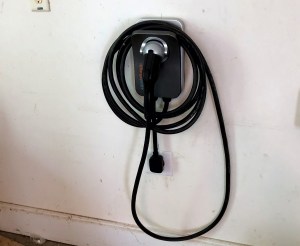
Where some people run into problems, however, ends up being that the home charging station isn’t something that may come up prior to purchasing an EV or something that is discussed with enough detail at the dealership. It’s also very likely that dealers are not as well informed as they could be about what is involved in getting a charging station installed. Regardless, it is very important for anyone who will potentially be purchasing an EV to know that installing a charger at home can be complicated and it may be a good idea to call an electrician before buying the vehicle to avoid what could be some expensive surprises down the road.
The first thing to know about a home charging station is that installing one typically means adding a fairly significant amount of load onto your home’s electrical system. Most of the chargers being installed in homes now have a maximum capacity of 60 amperes. Most of them, such as the 3rd generation Tesla charger pictured here are also adjustable to smaller loads which gives you some flexibility. But of course, most people want to be able to charge their vehicle faster so the higher the capacity the better.
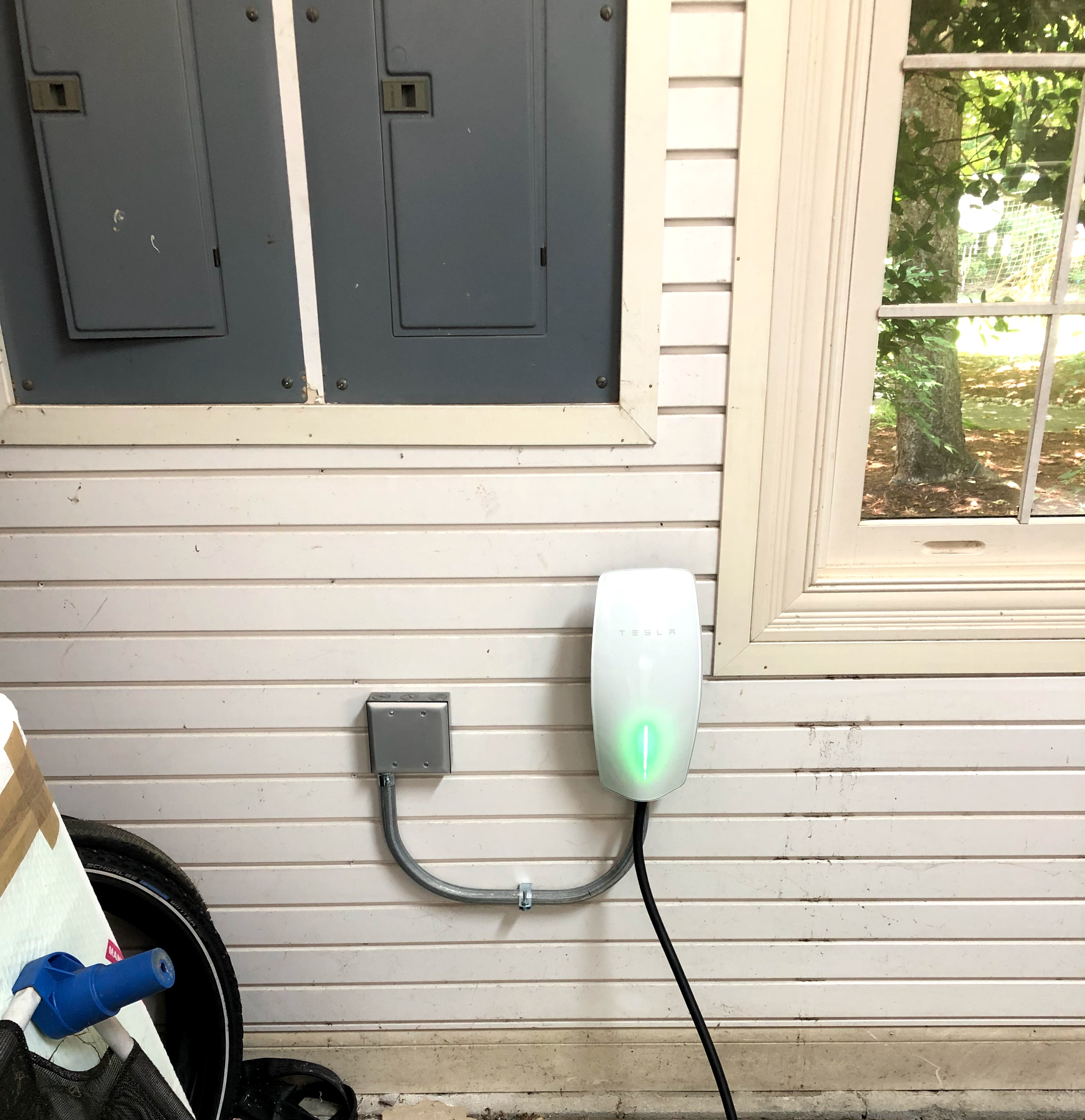
That being said, a 60 ampere load is fairly large when you consider that many homes have a total capacity of 200 amperes or less on their electrical services. And if your house already has electric heat, an electric range/cooktop, an electric water heater, etc.; you may find that the remaining capacity on your system won’t allow an electric car to be charged at the capacity you’d prefer or, at all in some cases.
To find out what your home’s system can handle, a licensed electrician will be able to do a load calculation to determine what demand there is already and how much more can safely be added. This will be important information to have if you are considering an EV purchase because you’ll be able to determine whether there may be significant additional costs involved beyond just the vehicle itself. In situations where there is not enough extra space in your home’s electrical system, having a charger installed may involve upgrading your service. Doing so will most likely involve replacing equipment such as breaker panels and meter cabinets as well as coordinating with your electrical utility company to have new lines installed either underground or overhead.
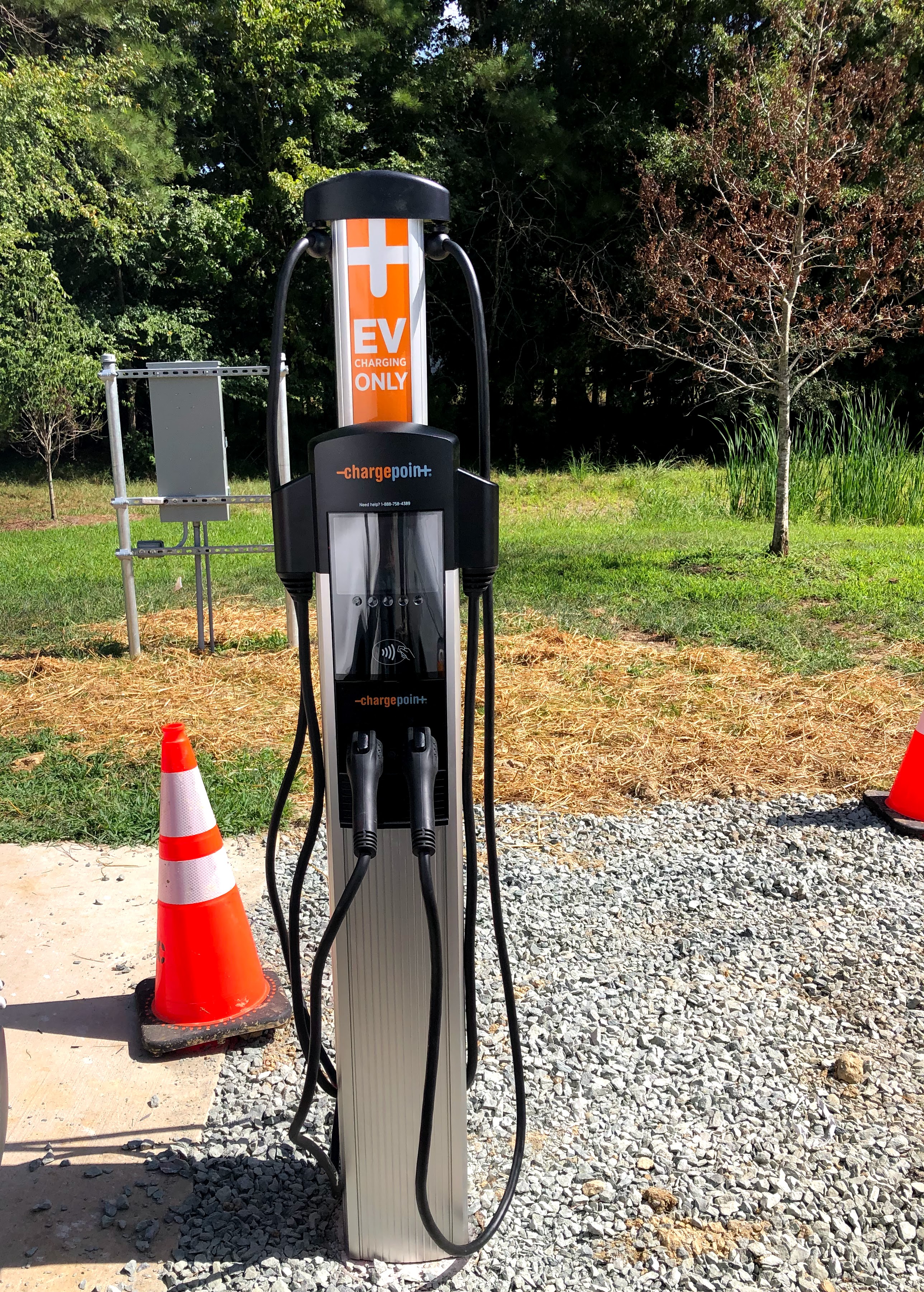
To be sure, none of this is meant to scare anyone away from getting an EV! But I do think it’s very important that people know the potential hidden costs involved. It will not likely be a car salesperson’s prerogative or responsibility to inform buyers about these things so hopefully this article will be helpful to people interested in transitioning away from fossil fuel vehicles.
Bearing that in mind it will also be important to consider the increase in your home’s power bill compared to the savings from buying less gasoline. To put things in perspective using our 60
ampere charging circuit (which technically pulls about 48 amperes in actuality), charging a vehicle at that capacity is more or less equivalent to running a typical HVAC heating system or an 11.5 kilowatt oven non-stop for the duration of the charging cycle. An EV can take upwards of 4 hours to reach a full charge from empty at this charging rate so if that much charging is necessary on a daily basis, it can get quite expensive. Of course there are several other factors involved in determining the true economics of an EV versus a traditional vehicle but this is certainly something to strongly consider for those who who do a lot of driving and may not have the opportunity to charge an EV other than at home.
There is certainly a lot to think about when it comes to the increasing popularity of electric cars and how we can adapt to lessen our dependance on fossil fuels. If you’ve found this article helpful or if you are thinking about getting an EV and have some questions please feel free to reach out to us at Obsidian Electric and let us know how we can help!
 Obsidian Electric